
What Makes a House Iconic?
SPECIAL - Best of Belgium
Restoring Richard Meier’s Douglas House
A new chapter for Richard and Su Rogers’ 22 Parkside
Home of the Future, 1925–1985: Designing Domestic Utopias at LACMA
Aalto Works Series Inscribed on the UNESCO World Heritage List
SPECIAL - Casas Icónicas en España!
Volten - Exhibition on Post-war Dutch Collective 'Liga Nieuw Beelden'
Breuer, Goldfinger and Other Hungarians
Icon for Sale: Villa Guna
City Icons Barcelona - Photo Gallery
Casa Moratiel Opens to the Public
Casa Rovira Guesthouse – Special Stay Offer
The Spirit Of Gaudí
Paolo Sustersic - At Home in Barcelona: City Living Reimagined
Architectural Conservation Trust Launched
SPECIAL –Inside Italy’s Most Iconic Houses
Iconic Encounters: Glasgow's Charles Rennie Mackintosh
SPECIAL – Women & Iconic Houses
The Humanism of Charlotte Perriand
Villa Beer opened 8 March 2026
Inside UNESCO Icons: Houses That Made History - Part 1
Inside UNESCO Icons: Houses That Made History - Part 2
Czech It Out: A Stylish Soirée of Exhibition and Film
Sopot Hosts Icons of Czech Avantgarde Exhibition
Pioneers of the Dutch Modern House - Film Screenings
Iconic Encounters: Barcelona
SPECIAL – Austria
SPECIAL – Czech Classics
SPECIAL - Vacances en France!
SPECIAL – Iconic Dreams Europe
SPECIAL – Iconic Dreams North America
Tautes Heim. Story & Details
Casa Gomis acquired by Spain's Ministry of Culture
Our Badge of Honour
New Year's Reception and Eileen Gray Screening
Funding Win Marks Anniversary of Mackintosh Acquisition
Modernist Houses Lost in the LA Wildfires
Casa d’Abreu Neto: Siza’s First Work
Pioneers of the Dutch Modern House
Iconic Encounters: London
Interview in Leading Catalan newspaper ARA
Record Number of New Iconic Houses - Part 1
Record Number of New Iconic Houses - Part 2
At Plečnik House: To Decide Where the Shadow Falls
A Story of Burnt Books and Broken Bricks
Remembering Irving J. Gill
Iconic Houses in the Media in 2024
Bauhaus Villa in Berlin For Sale
Historical Exhibition, Marie-Laure de Noailles, Painter, Conversation
Mackintosh’s Hill House Becomes an International Iconic House!
Istanbul’s Modernist Ataköy Housing Estate is At Risk
Early Furniture Designs by Le Corbusier on Permanent Display in Maison Blanche
Photo Report City Icons Amsterdam
Healing Through Architecture
Reopening An Iconic Modernist Landmark
City Icons Kick Off with Talk by Linda Vlassenrood
MORE MIES - Pure Architecture in Haus Lange Haus Esters
Through a Bauhaus Lens: Edith Tudor-Hart and Isokon
Modernism Week Lecture: 12 Years of Iconic Houses
Aluminaire House Grand Opening
Exhibition Icons of the Czech Avant-Garde
An Elementalist and Mediterranean Architecture
Icon for Sale - Loos Villa: Haus Horner
SPECIAL – UK Originals
SPECIAL – Dutch Delights!
SPECIAL – German Greats!
SPECIAL – Northern (High)Lights!
SPECIAL – Iconic Collective Housing
SPECIAL – Iconic Artist Residencies
Support the Frankfurt Declaration (on Housing)
Winy Wants a World Wonder
Welcome Atelier Volten!
Sleep in a Modernist Gem – Huis Billiet in Bruges
Iconic Houses in The Netherlands - 100 Years Van Zessen House
Exclusive Tour and Film Screening Package
The Last House Designed by Adolf Loos Will Be Built in Prague
Icons of the Czech Avantgarde
Icon for Sale - Casa Legorreta
Rietveld Day: 200 Enthusiasts Explored 3 Utrecht Icons
Hurray! 10 Years Iconic Houses
7th International Iconic Houses Conference A Huge Success
Meet Conference Co-Chair Iveta Černá
Meet Conference Co-Chair Maria Szadkowska
Eighteen Iconic Houses Under One Roof
17 June - 'Pioneers-film' Screening Amersfoort
Iconic Houses in The Netherlands - Van Eesteren House Museum
Welcome Margarete Schütte-Lihotzky Zentrum in Vienna!
Welcome Vila Volman! Jewel of Czech Functionalism
Movie Night: Adolf Loos- Revolutionary Among Architects
'Inside Iconic Houses' Case Study House #26 Webcast in Webshop
Inside Iconic Houses at Taut’s Home in Berlin
Rediscovering Forgotten Loos Interiors in Pilsen
'Inside Iconic Houses' - Online Tour Program
Iconic Houses in The Netherlands - The Diagoon House
Iconic Houses in The Netherlands - Rietveld Schröder House
Rietveld Houses Owners Association
Corberó Space: New Life for Hidden Jewel
Iconic Houses in The Netherlands - Pierre Cuypers' House and Workshops
Reeuwijk Celebrates Completion of Restoration Rietveld Homes!
Iconic Houses in The Netherlands - Van Doesburg Rinsema House
Welcome Rietveld's Van Daalen House!
Architect Harry Gessner Passed Away at 97
Watch Pioneers of the Dutch Modern House Now On Demand
Icon Saved: Dorchester Drive House
Iconic Houses in the Netherlands – Berlage’s Masterpiece
Iconic Houses in The Netherlands - Het Schip
Inside Iconic Houses - Tour of Maison Cazenave
Inside Iconic Houses Tours Vizcaya Museum & Gardens in Miami
Casa Masó Celebrates 10 Year Anniversary
Inside Iconic Houses tours Roland Reisley's Usonian Frank Lloyd Wright House
Rietveld’s Experimental Housing in Reeuwijk Saved
Serralves Villa after restoration
Portraits of the Architect - Interview with Gennaro Postiglione
Test Labs for New Ideas - Interview with Natascha Drabbe
Inside Iconic Houses - Isokon Building
Inside Iconic Houses - 16 December: Sunnylands with Janice Lyle
BCN-BXL Coderch-De Koninck - Beyond Time
New Chairman Architect Nanne de Ru on The Perfect Platform
Health and Home - Interview with Beatriz Colomina
A Life Less Ordinary – Interview with Valentijn Carbo
Invisible Women - Interview with Alice T. Friedman
Winy Maas on the Green Dip
Anita Blom on Experimental Housing of the 1970s
Women’s Worlds - Interview with Natalie Dubois
The Culture of Living - Interview with Robert von der Nahmer
Hetty Berens: A Fresh Take on Modernism
Niek Smit on Supporting Modern Heritage
Alice Roegholt on Amsterdam’s Working-Class Palaces
July is Iconic Houses Month
Hans van Heeswijk on The Pioneers of the Dutch Modern House
Wessel de Jonge on Dutch Icons at Risk
Save Maison Zilveli - Sign the Petition!
How a Building Tells a Story - Recorded Event
Toolkit for Owners of a Modern House
13 Aalto Sites Nominated for UNESCO World Heritage
Villa Beer At Risk - Sign the Petition!
Business Cards of Stone, Timber and Concrete in the Brussels Region 1830-1970
Exhibiting & Visiting Modernist Monuments
Fostering Well-Researched Responsible Design
ICONS AT RISK
Enjoy a virtual visit to the California House and a Q&A with architect Peter Gluck
Exhibition 'Modernism and Refuge'
A Hidden Gem of Postmodernism
New Centre for Historic Houses of India
An Online Chronicle of the Douglas House
Villa Henny, geometric style icon in The Netherlands
A Mendini temple in Amsterdam
IH-lectures USA & Canada Feb 2020 on Melnikov House
Sponsors and Friends
An Afternoon with the Glucks
Chandler McCoy on Making Modern Houses Sustainable
Catherine Croft: Getting Away from the Demolition Mentality in the UK
Patrick Weber on Discovering an Unknown Icon
Fiona Fisher on Iconic Interiors
Jocelyn Bouraly on Villa Cavrois
Mireia Massagué on finding success through a new kind of partnership
Danish Moderns – Looking Back at Our Mini-Seminar
Venturo house complements Exhibition Centre WeeGee’s offering
Lecture report: Remembering Richard Neutra
Hôtel Mezzara and the Guimard Museum project
We welcome 13 new members!
BREAKING NEWS: 8 Wright Sites Inscribed on Unesco World Heritage List!
LECTURE 29 August - Raymond Neutra: My Father and Frank Lloyd Wright
Iconic Reads
Iconic Houses End Year Message
City-ordered rebuild of landmark house stirs debate: Appropriate or overreach?
Kohlberg House Restoration in Progress
Planned Demolition of Rietveld Homes in Reeuwijk
Renovation Gili House in Crisis
An Iconic Saga
Restoring Eileen Gray’s Villa E-1027 and Clarifying the Controversies
Modernism on the East Coast
Iconic Houses in Latin America
Conference testimonials
House Tours May 2018
Expert Meetings
Natascha Drabbe - Iconic Houses: The Next Chapter
Terence Riley -KEYNOTE SPEAKER- on Philip Johnson
New era for Villa E-1027 and Cap Moderne
Hilary Lewis on Philip Johnson and his Glass House
John Arbuckle on Great House Tours
William D. Earls on the Harvard Five in New Canaan
Stover Jenkins on Working for Philip Johnson
Frederick Noyes on his Father’s House
Scott Fellows and Craig Bassam on their Passion for Preservation
Jorge Liernur -KEYNOTE SPEAKER- on Latin American Modernism(s)
Fabio Grementieri on Modernism in Argentina
Catalina Corcuera Cabezut on Casa Luis Barragán
Renato Anelli on Lina Bo Bardi’s Casa de Vidro
Tim McClimon on Corporate Preservation
Amanda Nelson on Building Donor Relationships
John Bacon on Planned Giving
Jean-Paul Warmoes on the Art of Fundraising in America
Chandler McCoy on Why Less is More
Katherine Malone-France on Moving with the Times
Anne Mette Rahbæk on Philanthropic Investments and Preservation
Peter McMahon on Saving Modern Houses on Cape Cod
Toshiko Kinoshita on Japanese Modern Heritage Houses
Roland Reisley on Life in a Frank Lloyd Wright House
5th Iconic Houses Conference May 2018
Kristin Stone, Pasadena Tour Company
Restoring the past: The Diego Rivera and Frida Kahlo Home Studio
Behind the Scenes: Hendrick de Keyser Association
Crosby Doe, Architecture for Sale
Latin America Special – Focus on Mexico
De Stijl in Drachten
Preserving the Nancarrow House-Studio
Meet the Friends - Nanne de Ru
Latin America Special – Focus on Brazil
Jan de Jong’s House is Latest Hendrick de Keyser Acquisition
Stay in a Belgian Modernist Masterpiece
In Berlin’s Modernist Network
Rietveld-Schröder House Celebrates De Stijl Anniversary
Meet Our New Foundation Board Members
Maintaining Aalto's Studio – Linoleum Conservation
Virtual Tour of a Papaverhof Home in 3D
Getty Grant for Villa E-1027
Plečnik House in Ljubljana
Iconic Dacha
Iconic Houses: A Bohemian Road Trip
Work in Progress: Capricho de Gaudí
11 Le Corbusier Homes now on Unesco World Heritage List
At home with Le Corbusier
Henry van de Velde’s Study in Haus Hohe Pappeln Restored
Lynda Waggoner reports
A Conference to Remember
4th International Iconic Houses Conference
Guest of Honor - Harry Gesner
Fallingwater: European Lecture Tour
Wright Plus 2016 Walk
Susan Macdonald, Getty Conservation Institute
John Mcllwee, Garcia House
Meet the Friends – Elisabeth Tostrup
Iconic Houses: The Story So Far
Willie van Burgsteden, designer Iconic Houses
Buff Kavelman, Philanthropic Advisor
Meet the Friends - Frederick Noyes
Sheridan Burke, GML Heritage
Meet the Friends - Raymond Neutra
Sidney Williams, Frey House
Franklin Vagnone and Deborah Ryan, Museum Anarchists
Meet the Friends - James Haefner
Toshiko Mori, architect
Malachi Connolly, Cape Cod Modern House Trust
Meet the Friends - Penny Sparke
Lucia Dewey Atwood, Eames House
Cory Buckner, Mutual Housing Site Office
Jeffrey Herr, Hollyhock House
Speaking Volumes: Building the Iconic Houses Library
Sarah Lorenzen, Neutra VDL Studio and Residences
Ted Bosley, Gamble House
Keeping It Modern - Getty Conservation Grants
Meet the Friends - Thomas Schönauer
Wim de Wit, Stanford University
Linda Dishman, Los Angeles Conservancy
Jesse Lattig, Pasadena Heritage
Join us in Los Angeles! Update
Work in Progress: Casa Vicens
Work in Progress: Van Wassenhove House
Work in Progress: Villa Cavrois
Work in Progress: The Pearlroth House
Conference calls!
Follow us!
Third Iconic Houses Conference a huge success
Conference House Tours Barcelona
Marta Lacambra, Fundació Catalunya-La Pedrera
Natascha Drabbe, Iconic Houses Foundation
Special speaker Oscar Tusquets
Jordi Tresserras, UNESCO Network ‘Culture, tourism and development’
Christen Obel, Utzon Foundation
Elena Ruiz Sastre, Casa Broner
Fernando Alvarez Prozorovich, La Ricarda
Tim Benton, Professor of Art History (Emeritus)
Susana Landrove, Docomomo Spain
Rossend Casanova, Casa Bloc
Icon at Risk: Casa Gomis / La Ricarda
Conference Program 25 November 2014
Jordi Falgàs, Casa Rafael Masó
Documentary La Ricarda
Marga Viza, Casa Míla/La Pedrera
Celeste Adams, Frank Lloyd Wright Trust
Conference 25 November 2014 at La Pedrera
Henry Urbach, The Glass House
Victoria & Albert Museum London November 12, 2013
Tommi Lindh, new director of the Alvar Aalto Foundation and Museum
Iveta Černá, Villa Tugendhat
Lynda Waggoner, Fallingwater
Kimberli Meyer, MAK Center
Rent a house designed by Gerrit Rietveld
Barragán House on Screen
Gesamtkunstwerk – An Icon on the Move
Triennale der Moderne 27 September - 13 October 2013
Prestigious Art Nouveau mansions in Brussels open
September 14 + 15: Heritage Days in Paris
June's New Arrivals: Museum Apartments
Iconic Houses is now on Twitter and Facebook
Corbu’s Cabanon: Reconstruction and Lecture
Projekt Mies In Krefeld: Life-sized model of the Krefeld Clubhouse
New arrivals: Spain special
MAMO: Le Corbu’s ‘Park in the Sky’ open 12 June
Taut's Home wins Europa Nostra Award
Annual Wright Architectural Housewalk: 18 May
Frank Lloyd Wright Homes on Screen
Message from the Editor
Neutra’s House on Screen
Michel Richard, Fondation Le Corbusier
Symposium The Public and the Modern House
Melnikov House on Screen
Iconic Houses in the media
Message from the Editor
Round Table Review
Eileen Gray House on Screen
Copy Culture
At Home in the 20th Century
New 20th century Iconic Houses website launches
Philippe Bélaval, Centre des monuments nationaux
The Spirit Of Gaudí
This article by Kirsten Hannema appeared in leading Dutch newspaper de Volkskrant on 9 June 2026
Is Barcelona a paradise for Gaudí enthusiasts? Absolutely—especially in this Gaudí Year. Yet the Catalan metropolis has far more to offer architecturally. De Volkskrant visited both historic and contemporary icons and found countless traces of the master architect’s influence.
When people think of Barcelona and architecture, the image that inevitably comes to mind is Antoni Gaudí’s Sagrada Família. For a century and a half, the basilica has been the city’s most ambitious construction project. With the completion of its 173-meter central tower dedicated to Christ, it has become even more impressive. On June 10, the 100th anniversary of Gaudí’s death, the Pope will bless the tower.
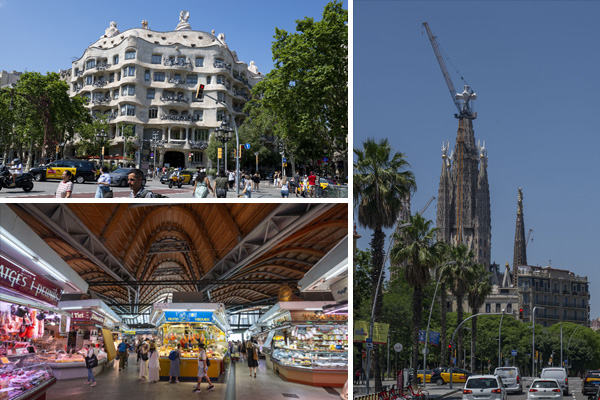
Last year, the Sagrada Família welcomed 4.9 million paying visitors. This year that number is expected to be even higher, as the city celebrates Gaudí Year and has been designated UNESCO’s World Capital of Architecture. A double celebration, then—but architect Yolanda Ortega Sanz, who is involved in organizing the architecture year, has mixed feelings. What, she asks, does Gaudí really mean to Barcelona today?
“The completion of the Sagrada Família is not important to me,” says Ortega Sanz. “Architects and residents are tired of it because of the tourists who take over these buildings.” Even Park Güell, originally designed by Gaudí between 1900 and 1914 for industrialist and patron Eusebi Güell, has required paid admission since 2013. The sheer volume of visitors threatened the preservation of its distinctive trencadís walls, a Catalan mosaic technique made from broken ceramic fragments.
Of course, Ortega Sanz also recognizes the architectural value of Gaudí’s buildings. They define the city’s image and have inspired generations of designers. Consider architect Enric Miralles, known among other works for the renovated Santa Caterina Market (2005), whose undulating roof of colored ceramics echoes Gaudí’s style.
Or think of star architect Santiago Calatrava, whose bridges and railway stations build upon Gaudí’s sculptural language. Or simply look across the street from Casa Milà, where Japanese architect Toyo Ito created a contemporary homage in 2009 with a façade of flowing aluminum strips.
The architecture center where Ortega Sanz receives visitors is itself indirectly connected to Gaudí. Located in the Eixample district, it occupies the former Gustavo Gili publishing house, a 1961 complex characterized by clean lines of steel, glass, and concrete. At the time, this rationalist style was dominant and Gaudí had fallen out of fashion. So much so that during renovations of Casa Batlló, original historic doors were discarded onto the street and narrowly rescued by an employee of the Museu Nacional d’Art de Catalunya.
A reassessment of Gaudí began thanks to avant-garde artists such as Salvador Dalí, who considered him a hero and wrote enthusiastically about him. During a lecture in Park Güell in 1956, Dalí contrasted the atomic bombs dropped on Hiroshima with Gaudí’s creative power, describing the architect as a “morphological bomb.”
That same year, construction resumed on the Passion Façade of the Sagrada Família after years of interruption. In 1984, UNESCO added the basilica to its World Heritage List. Meanwhile, the internationally renowned Gustavo Gili publishing house contributed to the worldwide promotion of Gaudí through numerous books on art and architecture.
In the center’s entrance hall stands a giant model of Barcelona alongside an exhibition about the “livable city.” Visitors can write on postcards describing how they envision the city in 2035. Common themes include “green,” “everyone has access to a dignified life,” and “more housing!”
“The goal of the World Capital of Architecture program is to show the importance of architecture for ordinary people and everyday life,” says Ortega Sanz. She wants visitors to look beyond the tourist hotspots. Each month one of the city’s ten districts is highlighted, and throughout the year some 1,500 activities—from workshops and exhibitions to guided tours—are being organized.
That is why De Volkskrant skipped the Sagrada Família and instead visited lesser known yet equally spectacular buildings. Each demonstrates in its own way how Gaudí’s ideas continue to shape architecture today.
Casa Vicens (1885): Gaudí’s Manifesto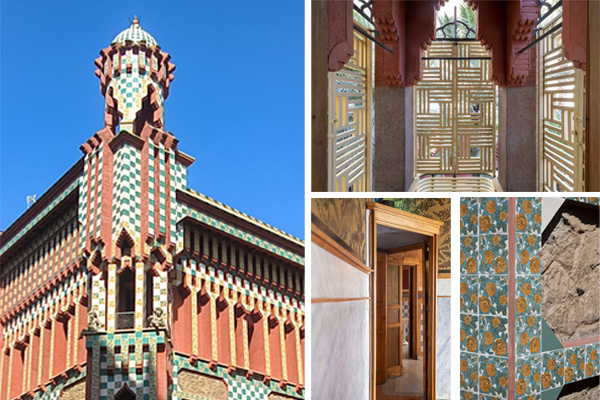
Like Hansel and Gretel stumbling upon a gingerbread house in the forest, visitors wandering through the Gràcia district suddenly encounter a fairy-tale villa with colorful tiled façades, wooden shutters, and terracotta towers. This is Casa Vicens, Gaudí’s first major work and one of the buildings that launched Modernisme Català, the Catalan version of Art Nouveau.
“This was Gaudí’s starting point—his manifesto,” says museum director Emili Masferrer.
Fresh out of architecture school at age 31, Gaudí created a total work of art that combined craftsmanship, nature, climate-conscious design, and innovative prefabrication techniques. He even used lightweight papier-mâché ceiling tiles shaped like shells and ivy leaves.
Inspired by the British Arts and Crafts movement as well as Moorish and Eastern motifs, he blended these influences with traditional Catalan elements such as ceramics and vaults. The surrounding garden inspired decorative marigold tiles and a wrought-iron gate adorned with palm leaves.
Commissioned as a summer residence for stockbroker Manuel Vicens, the villa embodied Gaudí’s vision of a house as a “small nation” for the family living within it. It was carefully positioned to maximize daylight and natural ventilation through shutters and slatted balconies. Architecture, Gaudí believed, should possess character so that children growing up there would feel like “citizens of the nation.”
Subsequent owners altered the property, adding wings, selling off portions of the garden, and removing much of the original furniture. After a private foundation acquired and meticulously restored the building in 2014, this key work can once again be appreciated in all its glory.
Walden 7 Housing Complex (1975): A Statement Against Monotony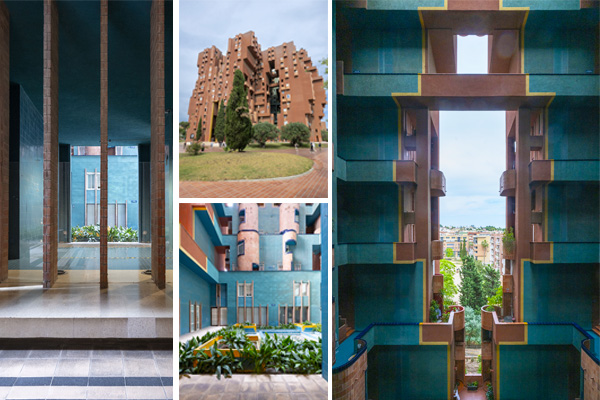
Ninety years after Gaudí introduced a new vision of residential quality through Casa Vicens, postmodern architect Ricardo Bofill (1939–2022) sought to bring similar ideals to the masses through Walden 7, an apartment complex in the suburb of Sant Just Desvern.
Rather than copying Gaudí’s aesthetics, Bofill embraced his rejection of repetition, respect for Catalan building traditions, and spirit of experimentation.
Using reinforced concrete and brightly colored tiles, he created a structure resembling a gigantic termite mound containing 460 owner-occupied apartments—a bold statement against monotonous housing blocks. Though symmetrically organized around two courtyards, its staggered floors and semi-circular balconies ensure that no corner looks the same.
The name Walden references Henry David Thoreau’s 1854 book about living simply in a self-built cabin in nature. Bofill hoped to create a self-sustaining urban community.
Resident Marta Nebot, a proud “Waldenista,” has happily lived there for 31 years. “In summer we eat together in the galleries, organize wine tastings and concerts, and this morning we even held a flea market on the lawn.”
A cooling breeze flows through the courtyards, which contain a library, café, and recreational spaces. When drops of water fall onto her head during the tour, Marta laughs—the “rain” is coming from the rooftop swimming pool, her favorite place.
Just as Gaudí’s style initially divided public opinion, Walden 7 also provoked strong reactions. Spain’s Franco regime obstructed Bofill’s idealistic plans, forcing him to spend time abroad. Although Walden 7 was meant to be the first in a series of residential projects, the larger vision never materialized.
Still, Bofill managed to transform the silos of a former cement factory on the site into his home and office, from where he could gaze at “the monster.”
“That’s what people in central Barcelona call our building,” Marta says. Yet interest in Walden 7 has grown significantly in recent years—not only because of its architecture, but also because regulations have helped keep apartments affordable. A 100-square-meter duplex can still be purchased for around €350,000.
Casa Corberó (1968–2017): The Life’s Work of “The New Gaudí”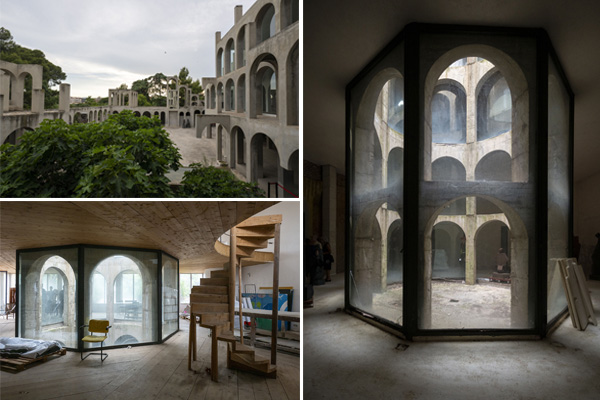
On the outskirts of Barcelona, in Esplugues de Llobregat, stands a walled complex hidden behind a massive garage door at the end of a narrow street. Entering it feels like falling down Alice’s rabbit hole into a world of labyrinthine rooms, arches, spiral staircases, mirrored spaces, and dramatic atriums.
This extraordinary place is the life’s work of sculptor Xavier Corberó (1935–2017), often referred to as “the new Gaudí.”
Corberó came from a family of renowned metalworkers and artists. His grandfather was a friend and collaborator of Gaudí, and from childhood Corberó was fascinated by Gaudí’s organic, sometimes surreal forms and his fusion of sculpture and architecture.
After studying in London and spending several years in New York, where his work entered museum collections, Corberó returned to Barcelona. In 1968 he purchased land with an old farmhouse and began building his dream: a habitable sculpture serving as home, studio, and gathering place for artist friends such as Salvador Dalí, Joan Miró, Max Ernst, Ricardo Bofill, and jewelry designer Elsa Peretti.
There was no master plan. Whenever money became available and inspiration struck, Corberó expanded the project. Over time it grew into a 6,000-square-meter universe containing around forty rooms and patios. When a nearby ceramics factory closed, he acquired all its tile samples and used them to decorate his kitchen—including a test tile featuring a shade of green developed by Gaudí himself.
Corberó continued working on the complex until his death in 2017. Since then, it has stood empty and fallen into disrepair. For years, local authorities debated its future. International developers wanted to demolish it and build new housing.
Ultimately, the property was sold last year to the Barcelona-based architecture firm Mesura, which plans to restore it. Today, partner architect Carlos Dimas is leading his first public tour of the site.
In Corberó’s spirit, Mesura and the Vasco gallery will transform the complex into a cultural center featuring artists’ workshops, exhibitions, and gathering spaces for residents and visitors.
“It will not be a museum designed simply to preserve the past,” says Dimas. “The city needs living places where new art and architecture can emerge.”
Architect Ana Badia, one of the tour participants, is enthusiastic about both the building’s eccentricity and its new purpose. She believes the decision reflects Gaudí’s legacy.
“I’m not particularly attached to Gaudí,” she says. “The tourism around his buildings has taken up so much space. But it is also the reason Barcelona now takes architecture so seriously.”
More information about Casa Vicens, Casa Milà, Casa Corberó, Walden 7, and other iconic houses in Barcelona can be found on IconicHouses.org.
Download here the article in Dutch.
Posted June 12, 2026